Peptid-Lexikon
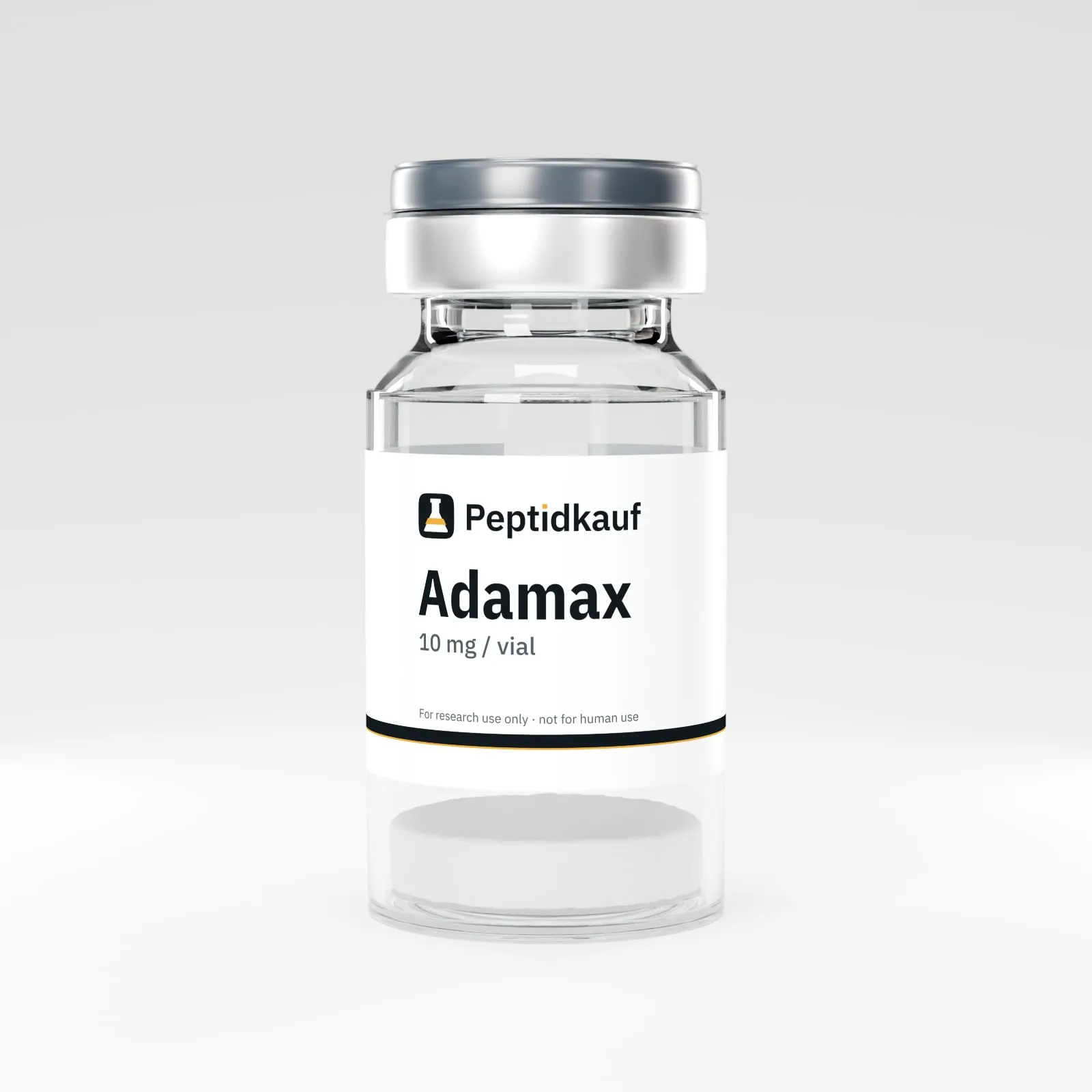
Adamax
Vom Semax abgeleitetes synthetisches Peptid, das in der Neuropeptid-Forschung als stabilisiertes Analogon geführt wird.
| Substanzklasse | Peptid |
|---|---|
| Synonyme | Semax-Analogon |
Struktur
Adamax basiert auf der Semax-Sequenz (ACTH(4–7)-Pro-Gly-Pro) mit zusätzlicher Modifikation zur Erhöhung der Stabilität. Eine peer-reviewte Strukturbeschreibung liegt bislang nicht vor.
Forschungsschwerpunkte
Die Literatur zu Adamax selbst ist sehr begrenzt; die Fragestellungen orientieren sich an Semax: neurotrophe Faktoren (BDNF), Signalwege der Melanocortin-Familie und Modelle neuronaler Schädigung.
Einordnung
Adamax ist nicht als Arzneimittel zugelassen; die Datenlage beschränkt sich auf präklinische und Herstellerangaben.
Literatur
- [Neonatal injections of pharmacological agents and their remote genotype-dependent effects in mice and rats]Ontogenez, 2012 · PMID 23401956
- Semax, an analog of ACTH(4-10) with cognitive effects, regulates BDNF and trkB expression in the rat hippocampusBrain Res, 2006 · PMID 16996037 · DOI 10.1016/j.brainres.2006.07.108
- Semax, synthetic ACTH(4-10) analogue, attenuates behavioural and neurochemical alterations following early-life fluvoxamine exposure in white ratsNeuropeptides, 2021 · PMID 33418449 · DOI 10.1016/j.npep.2020.102114
- Semax, an analogue of adrenocorticotropin (4-10), binds specifically and increases levels of brain-derived neurotrophic factor protein in rat basal forebrainJ Neurochem, 2006 · PMID 16635254 · DOI 10.1111/j.1471-4159.2006.03658.x
- Degradation of the ACTH(4-10) analog Semax in the presence of rat basal forebrain cell cultures and plasma membranesAmino Acids, 2006 · PMID 16773243 · DOI 10.1007/s00726-006-0328-8