


What is GHK-Cu?
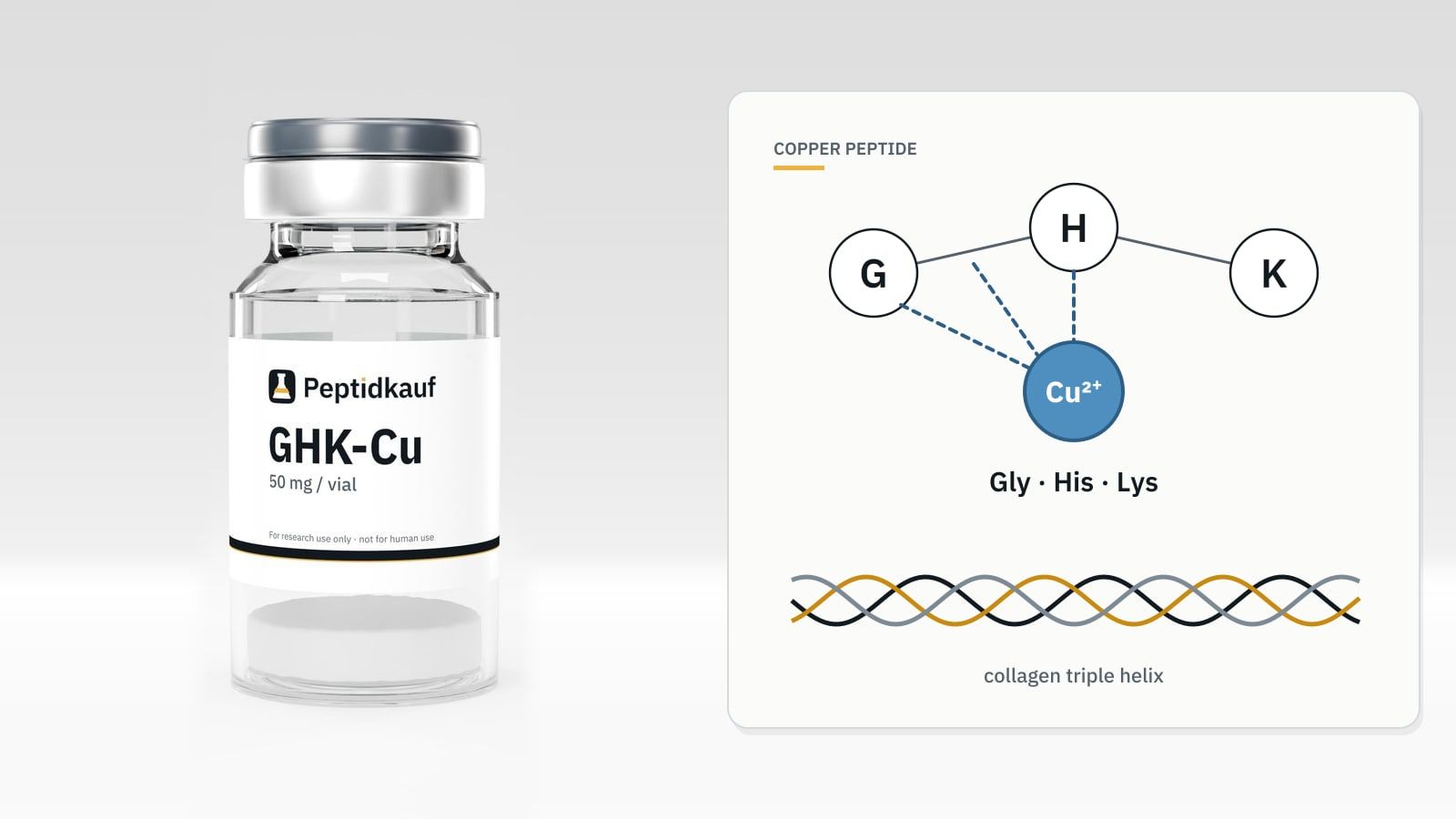
GHK is a tripeptide of glycine, histidine and lysine that binds copper(II) ions very tightly; the complex is called GHK-Cu, or copper tripeptide-1 in cosmetics. It was discovered in 1973 by the biochemist Loren Pickart in human plasma, and later measurements suggested that its concentration falls with age. The molar mass of the complex is 402.9 g/mol (CAS 89030-95-5).
Research status
Most data come from cell cultures and animal models. In fibroblasts, the connective-tissue cells of the skin, GHK-Cu increased the production of collagen and glycosaminoglycans. In animal wound models, wounds closed faster and more blood vessels formed. Gene expression analyses reported that GHK changes the activity of many genes; how to interpret this is open. In humans there are mainly small studies of cosmetic creams.
Research reagent or cosmetic?
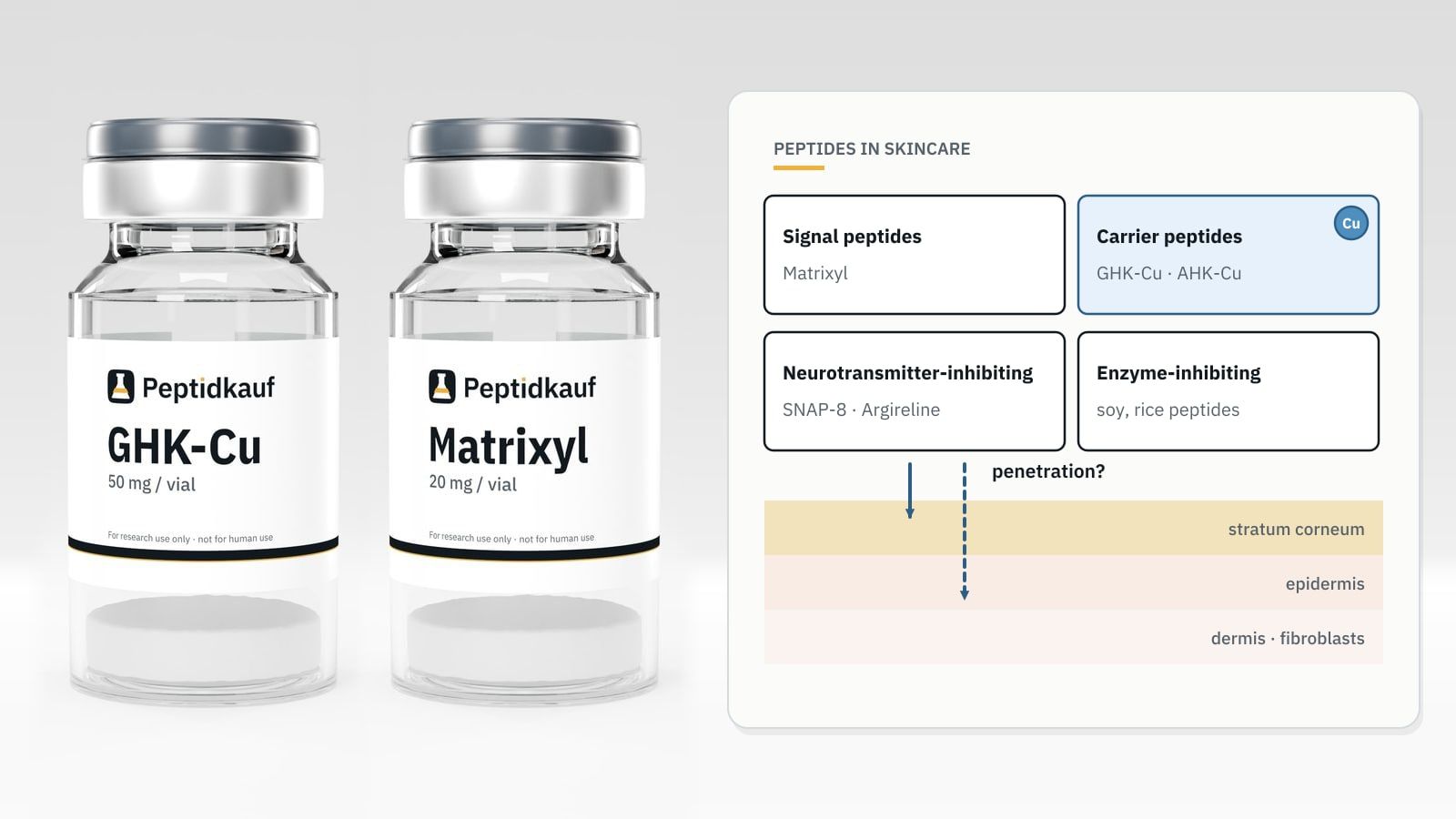
Cosmetics contain copper tripeptide-1 at low concentration as part of a finished formulation. Our GHK-Cu is a pure freeze-dried peptide for laboratory experiments: not a cosmetic and not intended for application to the skin. It is not approved as a medicine. Compare it with the related copper peptide in GHK-Cu vs. AHK-Cu.