


What is retatrutide?
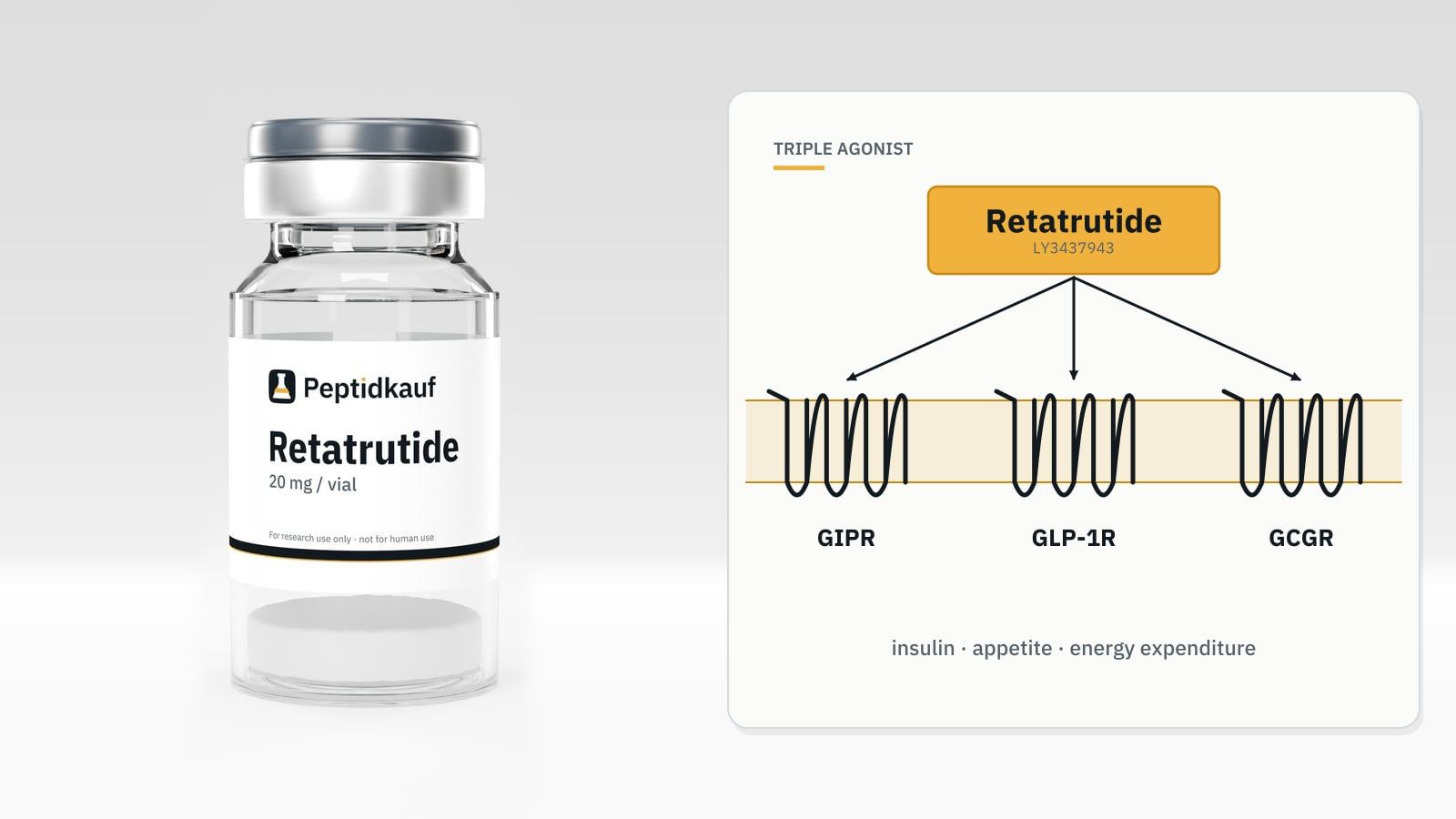
Retatrutide is a synthetic peptide developed by Eli Lilly under the code LY3437943. It activates three receptors at once: the GIP receptor, the GLP-1 receptor and the glucagon receptor, hence the names "triple agonist", "Triple G" and "GLP-3".
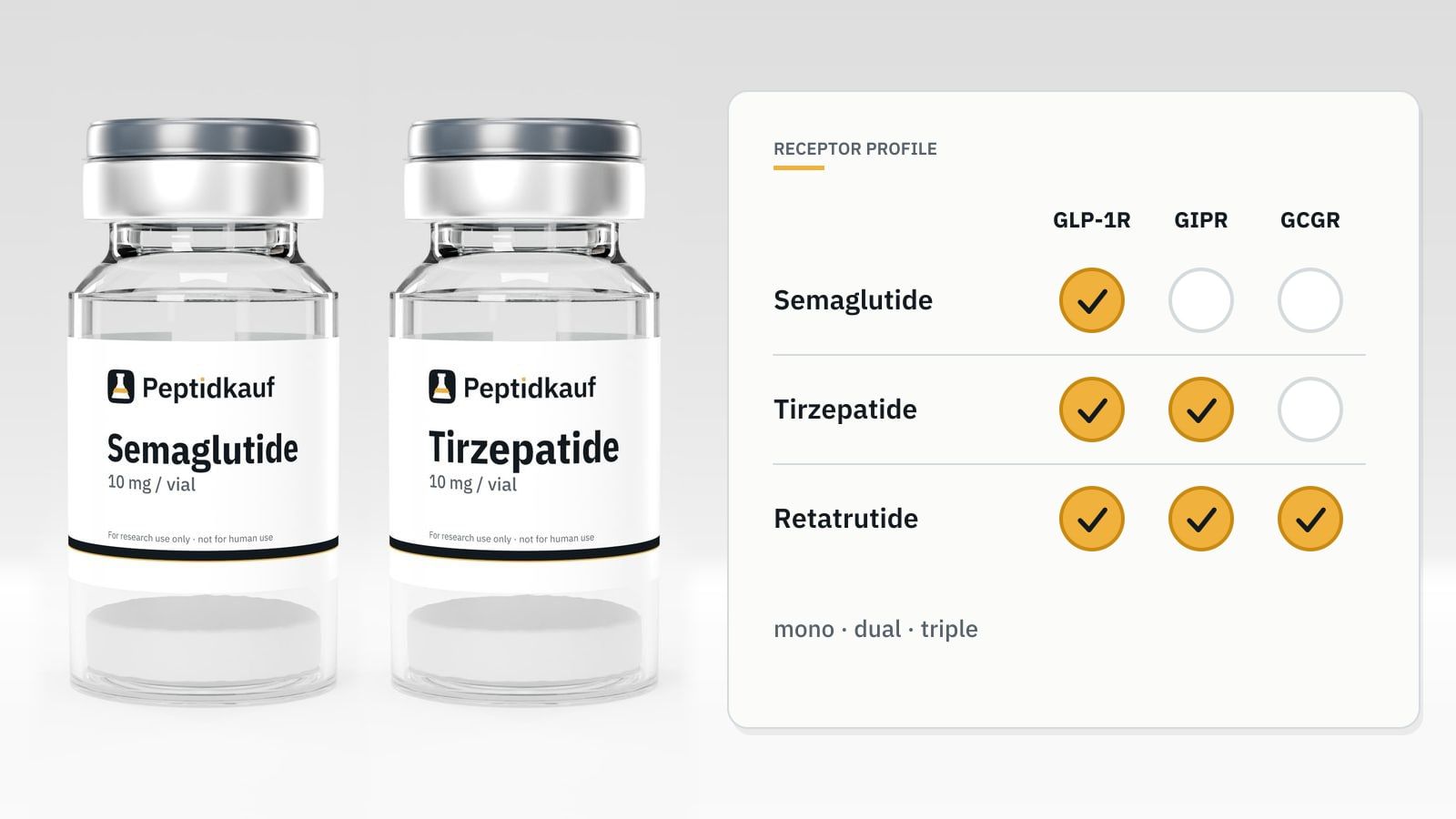
For comparison, semaglutide acts only on the GLP-1 receptor and tirzepatide on GIP and GLP-1. Retatrutide adds the glucagon receptor, which in models influences energy expenditure and liver fat metabolism. See retatrutide vs. tirzepatide.
Research status
The key published work is a phase 2 trial published in the New England Journal of Medicine in 2023. Adults with obesity received retatrutide or placebo for 48 weeks; in the highest dose group, body weight fell by about 24 per cent on average, versus about 2 per cent with placebo. A second phase 2 trial in type 2 diabetes reported improvements in long-term blood glucose. The phase 3 TRIUMPH programme is ongoing; until it is fully published and assessed by regulators, the data are preliminary.
Adverse events in clinical trials
The trials mainly reported gastrointestinal complaints such as nausea, diarrhoea, vomiting and constipation, mostly mild to moderate and more frequent during dose escalation, as well as a dose-dependent rise in heart rate. Long-term data over several years are not yet available.
Regulatory status
Retatrutide is not approved as a medicine in the EU or the US. Peptidkauf sells it exclusively as a research reagent for laboratory experiments, not for use in humans, and gives no dosing or usage advice.
Identity and purity
Because GLP-1 analogues are often confused on the market, the independent laboratory tests every batch blind against semaglutide, tirzepatide and retatrutide. Purity and content are in the batch report, which you can read before buying and verify at the lab.
Retatrutide price: what to compare
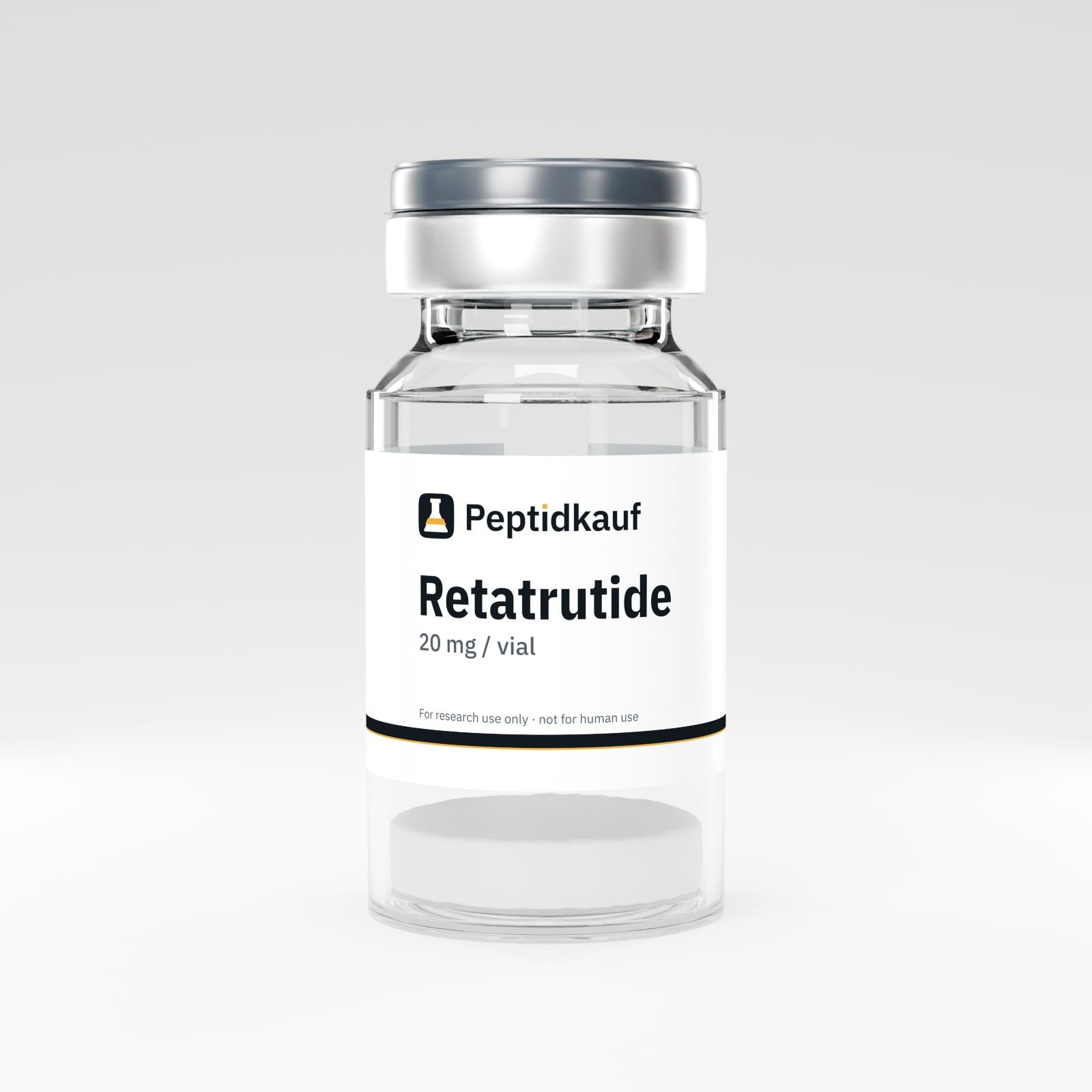
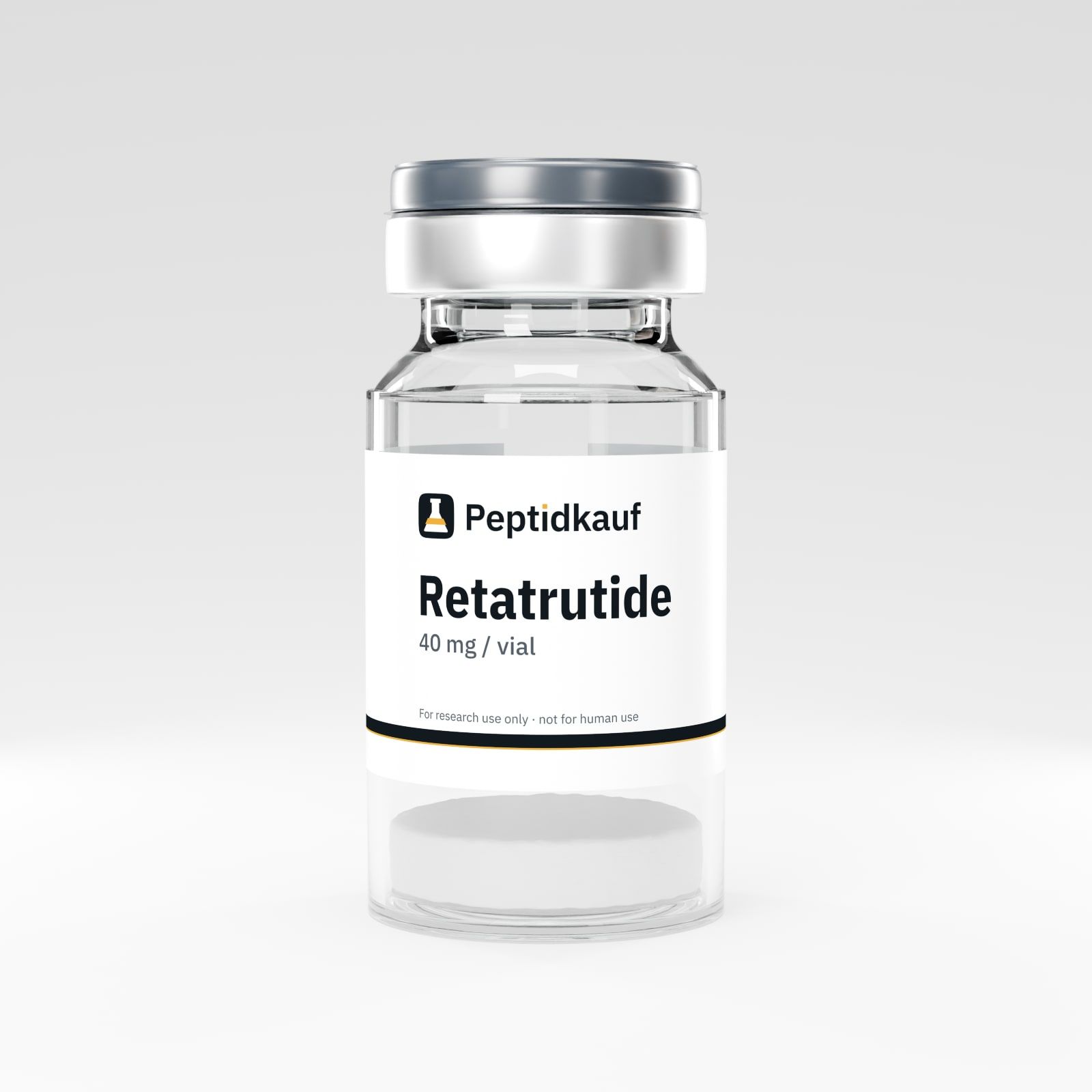
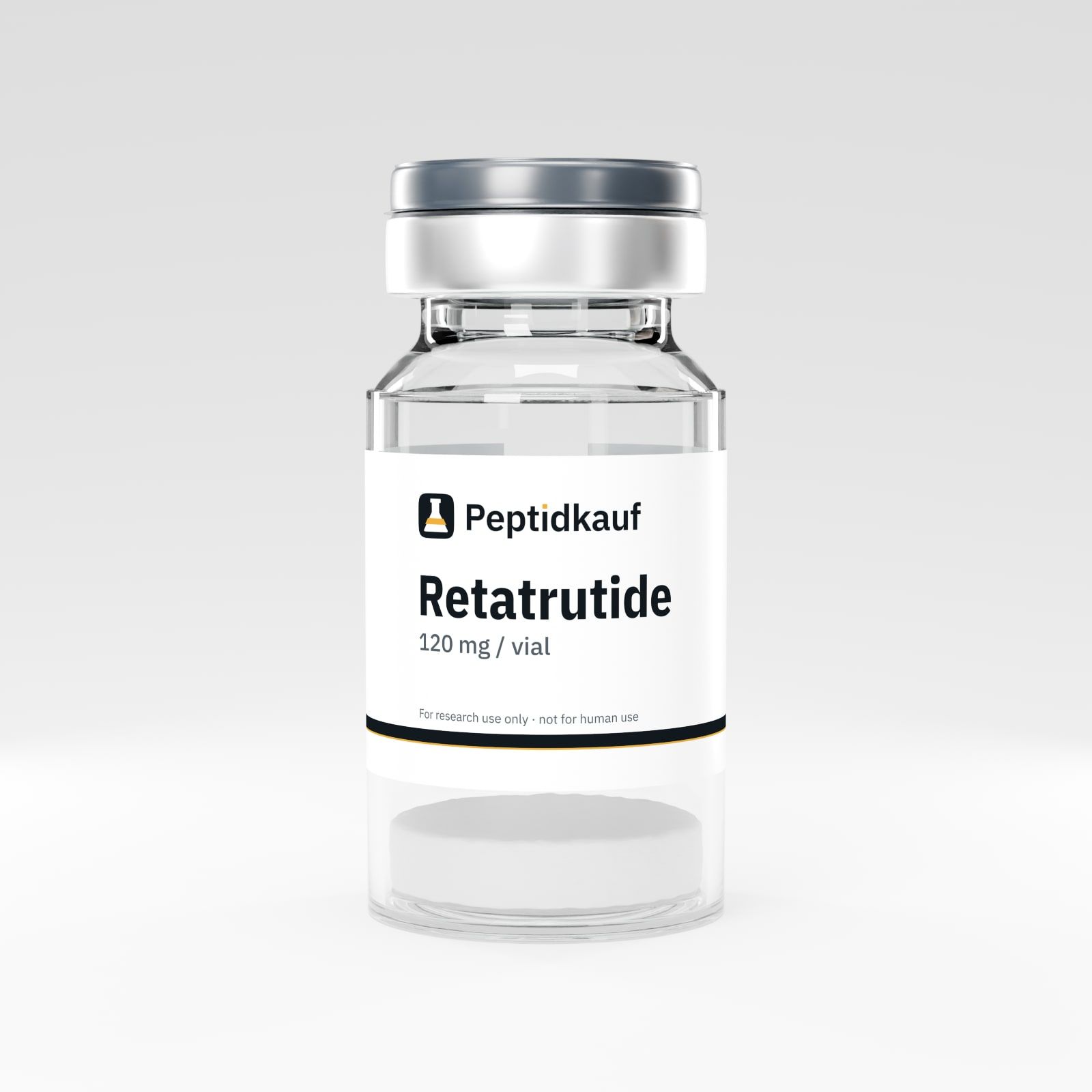
We sell retatrutide in 20 mg, 40 mg and 120 mg; the current price of each size is shown in the size selector above. Larger vials lower the price per milligram. Between suppliers, however, what counts is not the number on the label but the price per milligram of measured peptide: a cheap vial with low content or the wrong identity ends up costing more. The measured content of every batch is in the lab report.