


What is Melanotan 1?
Melanotan I consists of 13 amino acids. Replacing methionine with norleucine and L- with D-phenylalanine makes it resistant to oxidation and proteases and increases affinity for the melanocortin-1 receptor.
More data in the lexicon entry on Melanotan 1.
State of research
Melanotan 1 was developed at the University of Arizona in the 1980s to study the body's own pigmentation as protection against UV radiation. Two substitutions relative to α-MSH make it stable and much more potent.
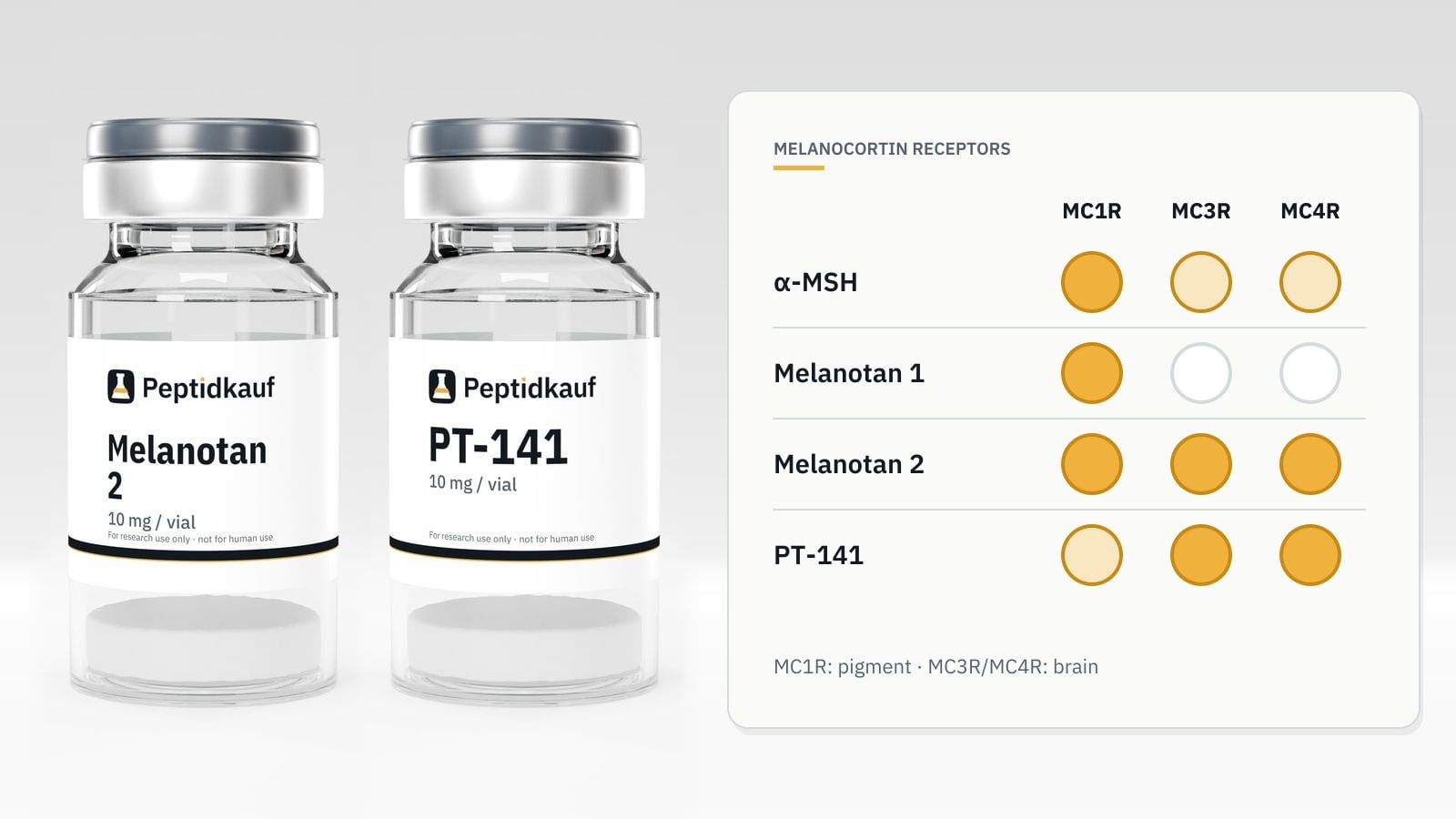
As afamelanotide it was tested clinically in erythropoietic protoporphyria, a disorder with painful light sensitivity; in the EU it has been approved as an implant for this since 2014. In research it is used to study MC1R signalling, eumelanin synthesis and UV damage in skin cells. Unlike melanotan 2 it is largely MC1R-selective.
Status and quality
Afamelanotide is approved as a medicine for a rare disease. The material offered here is not a medicinal product. Peptidkauf sells Melanotan 1 solely as a research reagent for laboratory and in-vitro use and gives no dosing or application advice.
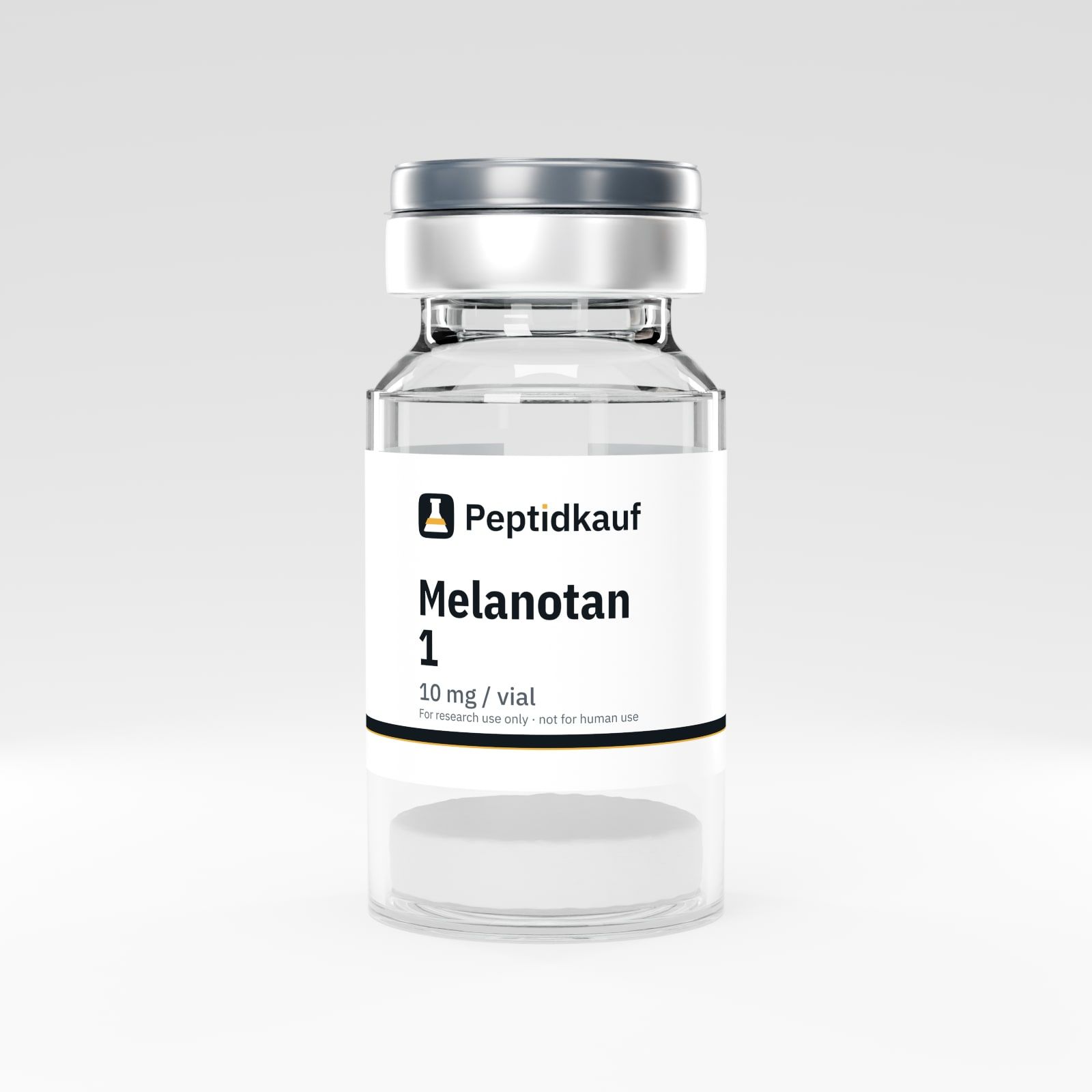
An independent laboratory tests every batch for purity (HPLC), identity and measured content before it goes on sale; the reports and their verification keys are in the lab report archive. The material ships as lyophilised powder in a glass vial; storage and laboratory handling are covered under storage & handling.
Related products and articles
The less selective analogue: melanotan 2. The parent sequence: ACTH (1-39). More skin research in the skin and copper peptides research area.
Background in the magazine: Melanotan 2, melanotan 1 and PT-141 explained