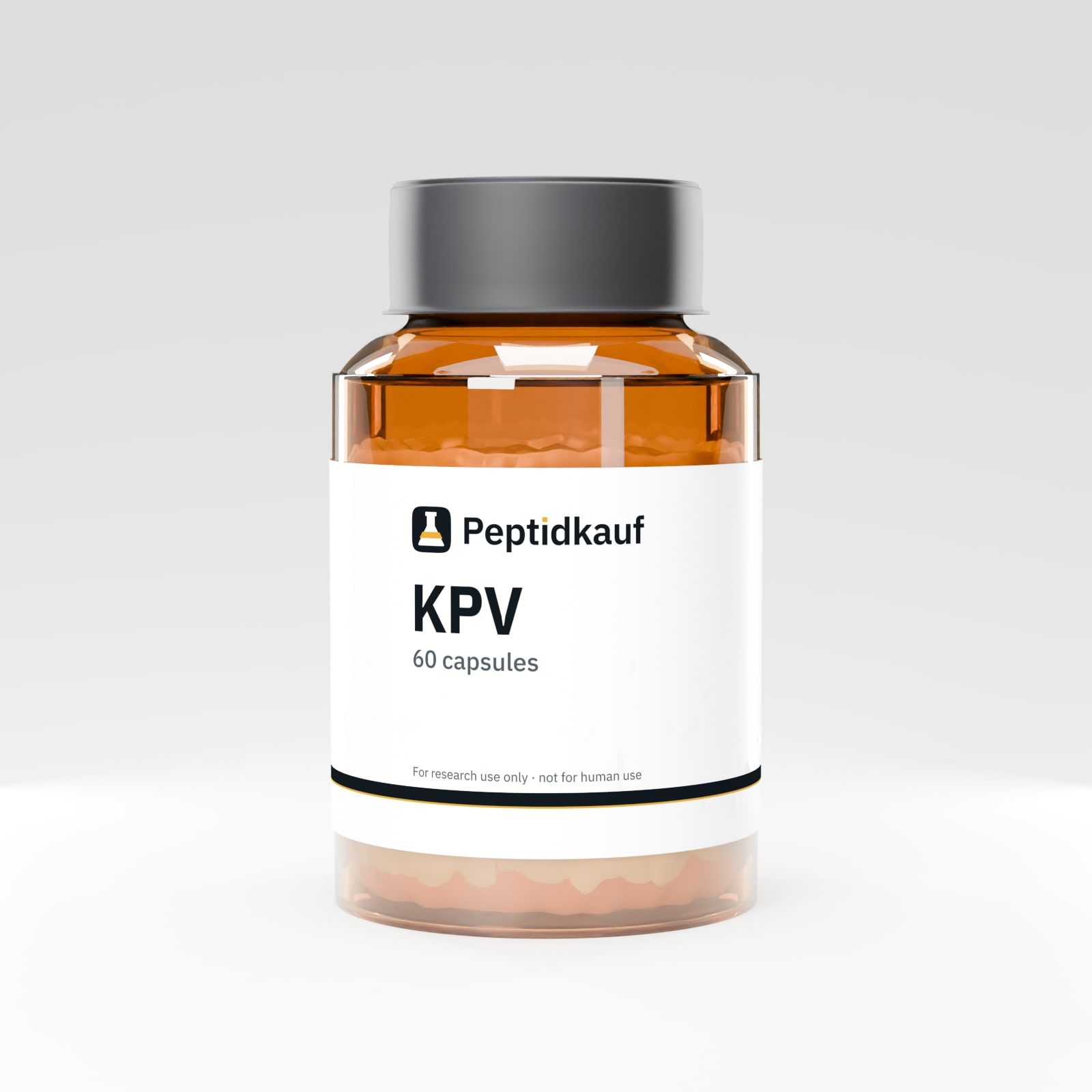



What is KPV Capsules?
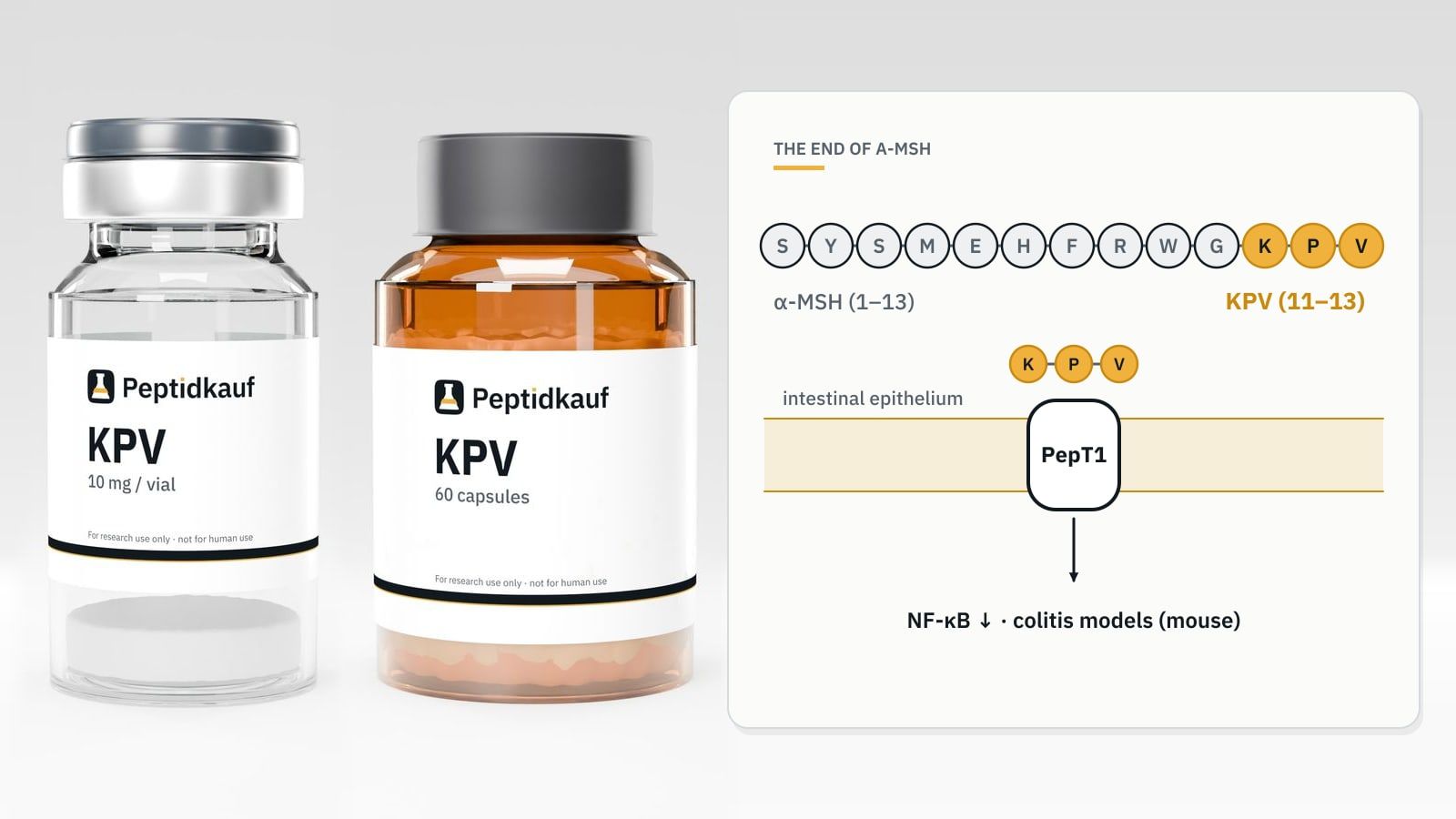
KPV corresponds to amino acids 11–13 of α-MSH. Unlike the full hormone it shows little melanotropic activity in studies but retains anti-inflammatory properties. In capsule form the substance comes in a constant amount per capsule, which makes standardised test series without reconstitution easier.
More data in the lexicon entry on KPV.
State of research
What makes KPV interesting in research? It keeps the anti-inflammatory properties of α-MSH but hardly affects pigmentation. A widely cited paper (Dalmasso et al., Gastroenterology 2008) showed that the peptide transporter PepT1 takes KPV into intestinal cells and that KPV in drinking water reduced inflammation in mouse colitis models.
Later work builds on this with KPV in nanoparticles released in the colon. Studies examine the NF-κB pathway and inflammatory mediators in intestinal epithelium and immune cells. There are no human data. Capsules with a fixed amount make experiments on release and uptake in gut cell models easier.
Status and quality
KPV is not approved as a medicine. Peptidkauf sells KPV Capsules solely as a research reagent for laboratory and in-vitro use and gives no dosing or application advice.
An independent laboratory tests every batch for identity and content before it goes on sale; the reports and their verification keys are in the lab report archive. Store the capsules dry, protected from light and at room temperature; no reconstitution is needed.
Related products and articles
KPV as lyophilised powder: KPV. In combination: BPC-157 + KPV, GHK-Cu + KPV, KLOW capsules.
Background in the magazine: What does KPV do? The tripeptide in research