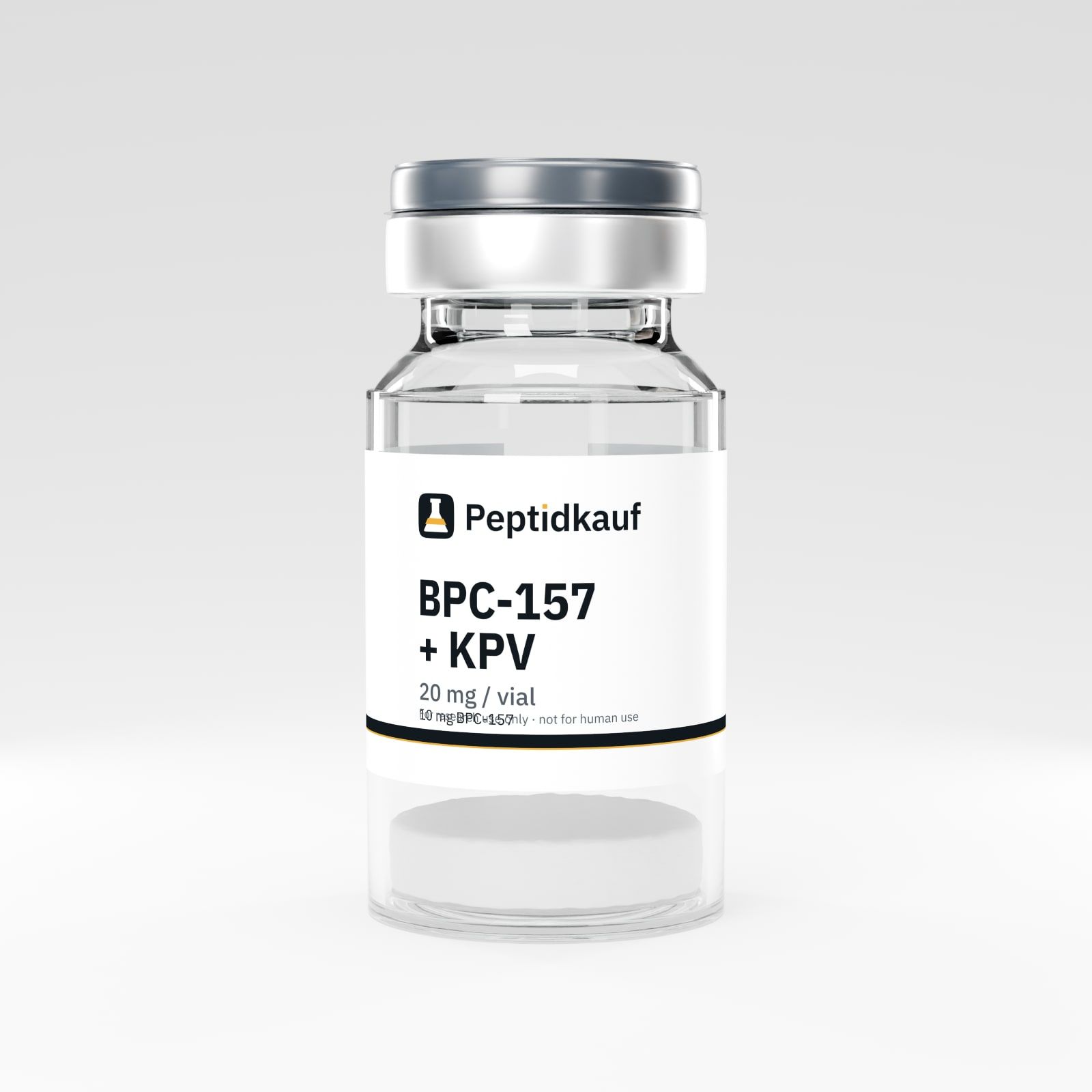



What is BPC-157 + KPV?
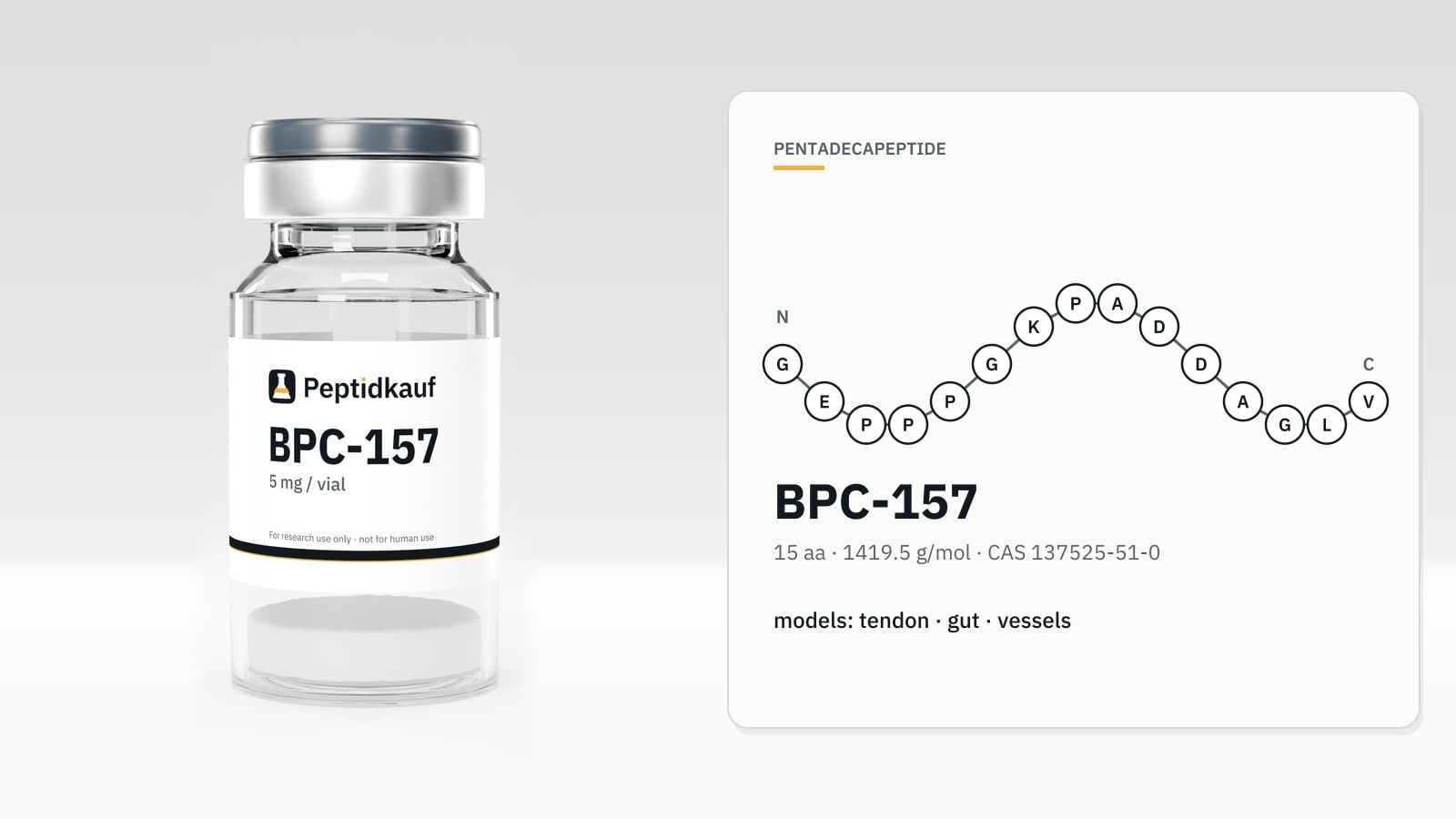
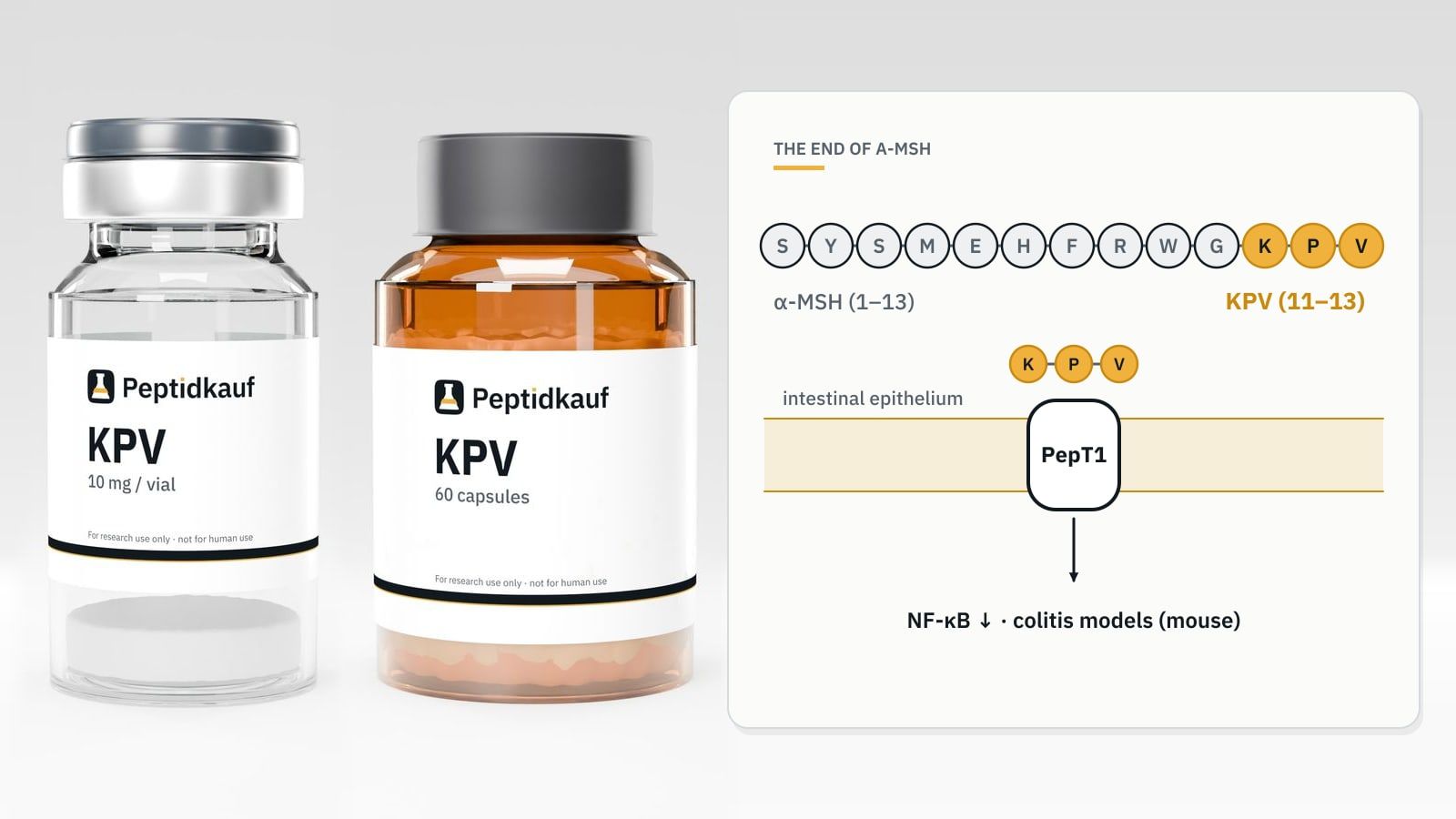
BPC-157: Synthetic pentadecapeptide (15 amino acids) derived from a partial sequence of the gastric juice protein BPC; one of the most studied peptides in preclinical regeneration models. KPV: Tripeptide Lys-Pro-Val, the C-terminal fragment of alpha-melanocyte-stimulating hormone (α-MSH 11–13), studied in inflammation models.
More data in the lexicon entry on BPC-157.
More data in the lexicon entry on KPV.
State of research
The combination follows a shared thread in the literature: BPC-157 was studied in rat models of colitis, intestinal fistulas and mucosal damage; KPV in mouse colitis models, where it enters intestinal cells via the transporter PepT1 and dampens the NF-κB inflammatory pathway.
The mechanisms differ: for BPC-157 the focus is angiogenesis and the nitric oxide system, for KPV the inhibition of inflammatory mediators. There are no studies of the combination; the blend simplifies experiments that look at both in a fixed ratio.
Status and quality
BPC-157 and KPV are not approved as medicines; BPC-157 is on the WADA Prohibited List. Peptidkauf sells BPC-157 + KPV solely as a research reagent for laboratory and in-vitro use and gives no dosing or application advice.
An independent laboratory tests every batch for purity (HPLC), identity and measured content before it goes on sale; the reports and their verification keys are in the lab report archive. The material ships as lyophilised powder in a glass vial; storage and laboratory handling are covered under storage & handling.
Related products and articles
Single: BPC-157, KPV. Larger combinations: BPC-157 + TB-500 + KPV, KLOW. Background: BPC-157 in research.