


What is NAD+?
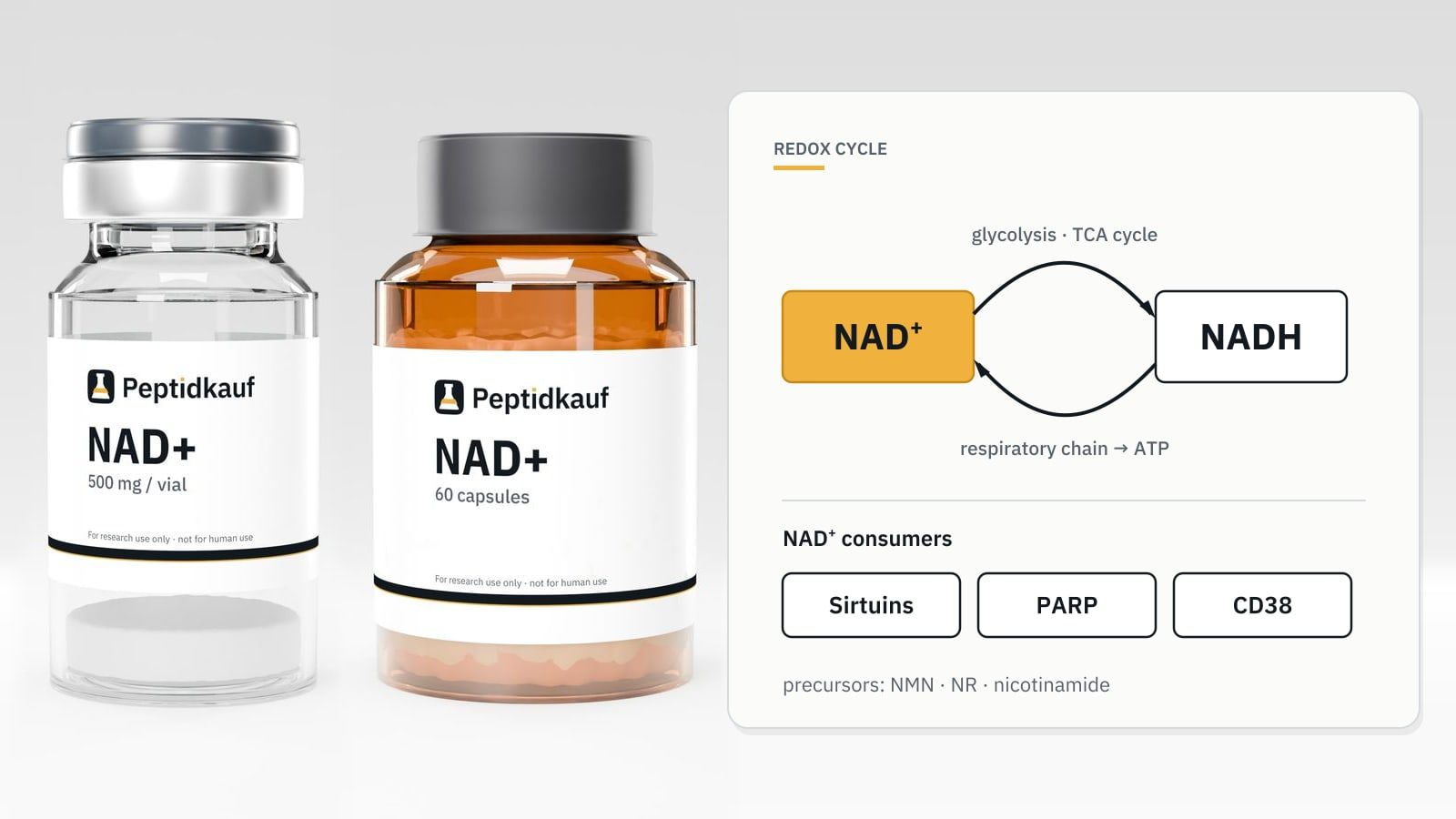
NAD+ consists of two nucleotides joined through their phosphate groups (663.4 g/mol, CAS 53-84-9). In the cell it constantly switches between two forms: oxidised NAD+ accepts electrons and becomes NADH, which passes them on, for example to the mitochondrial respiratory chain.
Research status
In animal models the NAD+ content of many tissues falls with age, which led to the idea of raising it with precursors such as NMN or nicotinamide riboside. In human studies these precursors increased blood NAD+ levels; a clear clinical benefit has not been shown. Small infusion studies of NAD+ itself reported transient discomfort such as nausea.
Status
Peptidkauf sells NAD+ exclusively for laboratory experiments, without usage or dosing advice. Every batch is tested independently; also available as capsules.